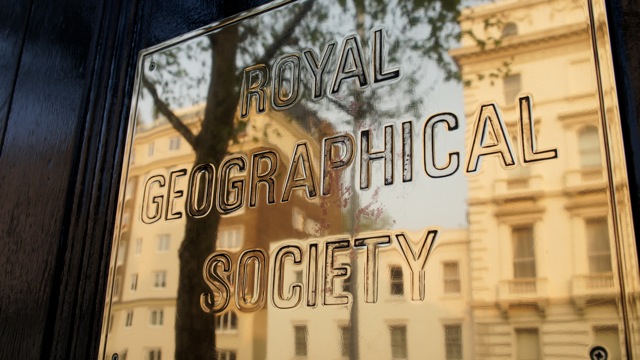
We can finally announce the list of our sponsored sessions for the upcoming Royal Geographical Society conference in Cardiff 28th – 31st August 2018.
Please contact session organisers if you are interested in submitting a paper.
Postgraduate Snapshots in/of the landscape
Maddy Thompson, Newcastle University, m.c.thompson@newcastle.ac.uk
Jen Owen, Cardiff University, OwenJ4@cardiff.ac.uk
Social and cultural landscapes – the traces and imprints of people and groups on the land – have long been of interest to geographers. Social and cultural geographers are adept at analysing, reading, and interrogating ‘landscapes’ from a variety of perspectives; accounting for processes of creation and maintenance, as well as lived experiences and practices. Even after forty years geographers are finding new ways and methods to conceptualise and understand landscape, considering how issues of power and dissent, identity and belonging, inequality and social justice, and memory and representation play out in the landscape.
This session showcases the ways Postgraduate Social and Cultural Geographers are negotiating and critically engaging with the concept of ‘landscape’ within their research. Each presentation will be centred round a single ‘Snapshot’ (whether an image, artefact, quotation, soundbite, field diary entry, or mini-video clip) which will form a focal point. Presenters are encouraged to delve into the varying ways we can encounter, apprehend, inhabit, belong to, move through, and be haunted by landscapes.
Sandscapes: geographies of flux and flow
Julian Brigstocke, Cardiff University, brigstockej@cardiff.ac.uk
William Jamieson, Royal Holloway, University of London William.jamieson.2017@live.rhul.ac.uk
Sand is the stuff of power. It is a vital material in modern construction. It transgresses borders and thresholds. It connects the elemental to the global. It is at home in land, sea, and air. Yet within social and cultural geography, little attention has been paid to the material life of this imaginatively potent material. This session addresses calls for a multiplication of materiality within the discipline (Anderson and Wylie 2009; Whatmore 2006), by delving into the multiplicity of sandscapes that pervade our lives in the context of a global shortage of sand (Peduzzi 2014). Sand, a seemingly mundane material, is an active substrate of the spaces of modernity, and constitutes a vantage point from which to read and write landscapes that are urban, coastal, nomadic; wet and dry; dispersed and fragmented; eroded and reclaimed. What aspects of the production of space slip through our fingers? How do we develop new ways of reading and writing everyday spaces that are intimately entangled with an inherently itinerant material?
This session invites papers that engage with the materiality of sandscapes, examining how sand might reinvigorate debates around: new materialism; affective and more-than-human geographies; and new ways of reading and writing landscape.
Landscapes of “Detectorists”
Dr Innes M. Keighren, Royal Holloway, University of London innes.keighren@rhul.ac.uk
Dr Joanne Norcup, University of Glasgow, joanne.norcup@glasgow.ac.uk
The BAFTA-winning situation comedy-drama “Detectorists” has, across three series and a Christmas special (2014–17), garnered critical praise for its affectionate portrayal of metal detecting and amateur archaeology in rural England. In its attention to the embodied practice of detecting and to the social worlds of detectorists, the programme has been described by critics variously as “about hardly anything and almost everything” (Lloyd 2015) and “the most accurate portrait of men being men that you’ll find in current popular culture” (Fewery 2015). For one Twitter user (Sumsion 2014), the show is simply “a warm, beguiling, slow-burn meditation on male friendship and prosaic details of Englishness, plus some metal”. Explaining his motivation for creating “Detectorists”, Mackenzie Crook, writer and director of the programme, has said “I wanted to do an exploration of men and their obsessions, and I wanted to do a celebration of people and their hobbies, and a celebration of the English countryside” (Crook 2015).
While the comedy in “Detectorists” centres largely on the friendship of Andy Stone (Mackenzie Crook) and Lance Stater (Toby Jones) as they pursue their niche hobby in the diverse company of the Danebury Metal Detecting Club (DMDC), the dramatic foil is provided by the relationships Andy and Lance have with their significant others—Andy’s geography-graduate, school-teacher wife, Becky (Rachael Stirling) and Lance’s exploitative ex-wife, Maggie (Lucy Benjamin)—and their antagonists, ‘Simon and Garfunkel’ (Simon Farnaby and Paul Casar), members of the DMDC’s arch rivals, the Antiquisearchers/Dirt Sharks. Nuanced characterisation and relatable situations have endeared “Detectorists” to viewers in the United Kingdom and beyond. Fans of the programme praise its “humanity and the honest observations of the real world” (Meaden 2015).
Where “Detectorists” is distinct from most situation comedies is that much of the action takes place outdoors, in the fields and meadows where the programme’s protagonists pursue their hobby. Both aesthetically and thematically, landscape dominates “Detectorists”. Filmed on location in Framlingham, Suffolk—standing in for Essex, and the fictional town of Danebury— the visual palate of the programme enfolds a non-human supporting cast of insects, birds, plants, and trees, and variously echoes the landscape paintings of Thomas Gainsborough and George Shaw, and the cinematic vision of Peter Hall’s “Akenfield” (1974). Landscape is, also, the focus of the protagonists’ preoccupations; it is variously walked, surveyed, sensed, gazed upon, read, and dug. Landscape is where the programme’s characters seek solitude, find companionship, and navigate the sometimes dramatic intrusions from ‘the rude world’. Landscape reveals the past while concealing the prospect of future discovery.
The following is a list of topics/themes our session seeks to explore:
Aesthetics and landscape;
Amateur and vernacular knowledge-making and practise;
Gender and friendship;
Geographies of comedy-drama;
Geographies of detecting;
Hobby geographies;
Landscape and Englishness;
Landscape and heritage;
Landscape and identity;
Rural geographies;
Sonic geographies;
Technology and the sensing of landscape;
Vertical geographies.
Historical-Cultural Geographies of Exhibition and Display
Dr James Robinson, Manchester Metropolitan University, james.robinson@mmu.ac.uk
Geographers have long expressed an interest in the practices and spaces of exhibition and display, from museum spaces and art installations (Geoghagen, 2010; Hawkins, 2008) to festivals, parades and a range of commemorative acts and landscapes (Cudney, 2014; Johnson, 1995; Marston, 2002). These engagements have taken place in conjunction with a diverse range of geographical themes: exploring the discipline’s colonial legacies (Driver, 2013), the construction of imperial landscapes (Driver and Gilbert, 1999), cultures of remembrance (Johnson, 2003), and socio-cultural representations of nature (Naylor, 2002), to name some examples. Moreover, these accounts have often reflected upon the role of display and exhibition in the construction and contestation of a myriad of identities – of nationality (Kong and Yeoh, 1997), gender (Whitehead, 2008), sexuality (Johnston, 2008) and the non-human (Anderson, 1995). This session seeks to provide a forum for ongoing discussions about the historical-cultural geographies of exhibition and display. Contributions to the session may be historical or contemporary in nature. Themes for consideration include (but are by no means limited to):
Material landscapes and cultures of display and exhibition
Performative and enacted spaces of display
Sensuous geographies of display and exhibition
Parades and ritualised cultures of display
Cultural and contested politics of exhibition
Uncomfortable Geographies
Jen Owen, Cardiff University, OwenJ4@cardiff.ac.uk
Amy Walker, Cardiff University, WalkerA13@cardiff.ac.uk
Anthony Ince, Cardiff University, InceA@cardiff.ac.uk
As geographers have sought to consider everyday resonances of emotions, affects, and sensations, many have considered the notion of ‘comfort’, engaging with materialities (Price et al. 2018), public spaces (Boyer 2012), mobilities (Bissell 2008) and hospitality (Craggs 2015). However, in Cruel Optimism, Berlant (2011) reminds us that comforting things may have a darker side: aspirations to the ‘good life’ and middle-class dreams of suburban comfort consistently fail. We therefore view comfort and our desire for it in a tense relationship with its antitheses: discomfort and the uncomfortable.
To be uncomfortable is to feel discomfort, unease or awkwardness, or be fearful of the unknown. If Hinton (2010) suggests that comfort is an achievement/aspiration then discomfort can be perceived, within discourses of neoliberal austerity, as a personal failing. Yet discomfort can be generative or productive, driving social change, such as through geopolitical negotiation, political struggle, and living in diverse communities. This session wishes to explore what pushes us outside of our comfort zone. We invite deep empirical and theoretical engagements with dissonance, contradictions and the ambiguous that go beyond discomfort as just ‘another emotion’ (Pile 2010).
Topics could include but are not limited to:
Identity – being (un)comfortable in own skin
Being comfortably off – downplaying success/ wealth
Taboo – acknowledging the forbidden
Tragedy – dealing with distressing events
Violence – combating hostility
Political correctness – confronting discrimination
Morals/ values – re-evaluating ‘sinful’ behaviour
Ethics – engaging participants with discomfort
Everyday Landscapes of Memory
Amy Walker, Cardiff University, awalker13@cardiff.ac.uk
Kieran O’Mahony, Cardiff University, omanhonyk@cardiff.ac.uk
Kate Boyer, Cardiff University, boyerk@cardiff.ac.uk
Since Pierre Nora’s assertion that narratives of memory are fixed in place, or lieux de mémoire, geographers have increasingly engaged with the temporal-spatialities of memory and heritage (Nora 1989). Of particular interest to this session are the unofficial and everyday spatial practices that exist alongside formalised sites of heritage and commemoration. Many geographers have explored the ways in which such spaces and their practices are imbued with memories comprising of affective (Jones 2011), material (DeSilvey 2012), emotional (Horton and Kraftl 2012), spectral (Edensor 2005) and embodied capacities, forming ‘ecologies’ of memory across our everyday lives (Hoskins 2016). These memories may entangle the human and nonhuman, animate and inanimate matter, and occur at differing temporal scales.
This session aims to not only engage with the different ways in which memory can be understood, but also on the consequences of (doing/enacting) memory in the everyday. Being open to the ways they are invoked in contemporary contexts helps us consider the potential for these every day, illusive and multi-faceted memories to become politicised and intersect with broader collective narratives.
This session would welcome papers, or non-traditionally formatted presentations, on topics such as (but not exclusive to):
Everyday practices of memory
Family memory and remembrance
Non-Human/Material/Animal Memories
Affective Landscapes and memory
Everyday heritage practices
Commemoration and public/private memory
Embodied and performed memory
Contemporary political issues related to nostalgia- e.g. Brexit vote, nationalism, rewilding
movements
Geohumanities, literary cultures, and new landscapes of cartography
Jon Anderson, Cardiff University, andersonj@cf.ac.uk
Kirsti Bohata, Swansea University, K.Bohata@swansea.ac.uk
Kieron Smith, Cardiff University, smithk30@cardiff.ac.uk
Jeffrey Morgan, Cardiff University, morganj51@cardiff.ac.uk
Geographers have been central to re-presenting and re-creating the relations between landscapes and people from its inception as a public and academic discipline. The recent turn within cartography from the representational to the processual (see Kitchin, Gleeson, and Dodge, 2013) has not only created new ways of understanding what maps can be(come), but also coincided with the proliferation of social scientific, humanities, and digitised disciplines exploring the cartographic as a way to articulate the human condition.
This session explores these arena with particular attention to the relations between literature, culture, and place. It explores the ways an array of literary cultures story the landscapes around us. It asks how stories create new worlds, and how they relate to the ’real’ worlds in which we live? How do pictures (e.g. in the graphic novel), words (e.g. through oral narrative and novels), and illustrative augmentation (be it digitised or otherwise) combine to contribute new representations to the cartographic repertoire? Inviting papers that range from conventional distant mapping in literary geographies, to locative literature, ambient literature, artistic illiterature, and distant mapping, the session seeks to creatively explore what mapping can usefully be understood to be as a consequence of technological change, interdisciplinary convergence, and the processual turn. In short, it asks: what maps now exist to best aid our navigation of the real and imaginary landscapes we live in?
New Geographies of Automation?
Sam Kinsley, University of Exeter, s.kinsley@exeter.ac.uk
This session invites papers that respond to the variously promoted or forewarned explosion of automation and the apparent transformations of culture, economy, labour and workplace we are told will ensue. Papers are sought from any and all branches of geography to investigate what contemporary geographies of automation may or should look like, how we are/could/should be doing them and to perhaps question the grandiose rhetoric of alarmism/boosterism of current debates.
Automation has been the recent focus of hyperbolic commentary in print and online. We are warned by some of the ‘rise of the robots’ (Ford 2015) sweeping away whole sectors of employment or by others exhorted to strive towards ‘fully automated luxury communism’ (Srnicek & Williams 2015). Beyond the hyperbole it is possible to trace longer lineages of geographies of automation. Studies of the industrialisation of agriculture (Goodman & Watts 1997); Fordist/post-Fordist systems of production (Harvey 1989); shifts to globalisation (Dicken 1986) and (some) post-industrial societies (Clement & Myles 1994) stand testament to the range of work that has addressed the theme of automation in geography. Indeed, in the last decade geographers have begun to draw out specific geographical contributions to debates surrounding ‘digital’ automation. From a closer attention to labour and workplaces (Bissell & Del Casino 2017) to the interrogation of automation in governance and surveillance across a range of scales (Amoore 2013, Kitchin & Dodge 2011) – the processes and experiences of automation have (again) become a significant concern for geographical research.
The invitation of this session is for papers that consider contemporary discussions, movements and propositions of automation from a geographical perspective (in the broadest sense).
Examples of topics might include (but are certainly not limited to):
AI, machine learning and cognitive work
Automation and bias
Autonomy, agency and law-making
Automated governance
Boosterism and tales of automation
Economies of automation
Material cultures of robots
Mobilities and materialities of ‘driver-less’ vehicles
Robotics and the everyday
Techno-bodily relations
Working with robots
Sonic Spaces: music landscapes, soundscapes and identity
Eveleigh Buck-Matthews, Coventry University, Eveleigh.buck@gmail.com
Kris Vavasour, Ara New Zealand Broadcasting School, Kris.Vavasour@ara.ac.nz
Dr Heather Jeffrey, Middlesex University Dubai, Heather.l.jeffrey@gmail.com
Sonic spaces feature in a broad spectrum of research, and proposals are welcome from any areas of geography, cultural/media studies, and other social sciences that engage with musical spaces and places. This forum will discuss geographies of music and how these have developed, interconnecting with cultural practices, values and wider society, in keeping with the conference theme of landscapes. The social, legal, political, environmental, and economic geographies of music and sonic spaces offer many angles through which to explore the changing landscapes/soundscapes of the world.
Potential topics include but are not limited to:
Music festivals and gigs
Music subcultures and scenes
Music as resistance or protest
The night time or gig economy
Leisure spaces and music consumption
Drugs, drink and music scenes
City-based or regional sounds
Music and politics and/or legislation
Changing mediascapes of music
Music Pilgrimage
Accounts and reflections on research and fieldwork, alongside embodied experiences, are encouraged. We invite empirical and theoretical papers around these themes and others related to musical landscapes, including alternative forms of presentation.
Over-Researched Places
Cat Button, Newcastle University, cat.button@ncl.ac.uk
Gerald Taylor Aiken, University of Luxembourg, gerald.aiken@uni.lu
Certain places are magnets for researchers and sometimes we bump into other researchers or share interview times with them. The ‘Ghosts of Researchers Past’ linger at the case study sites we visit and traces are present in the work we produce. There has been recent interest in the problems of large numbers of researchers in places as diverse as Hackney (Neal et al, 2016), the Shatila Palestinian Refugee Camp in Lebanon (Sukarieh & Tannock, 2013), and Transition Towns (Taylor Aiken, 2018). This body of literature focuses primarily on reasons that particular places are popular with researchers or on research fatigue of respondents. There is a need for reflexive interrogation of the issue of this researcher saturation and its consequences. The research itself, and theory building more widely, can be weaker where it is over-reliant on examples which may prove to be outliers or the applicability of generalisations over-claimed. Over-research also produces a sample bias: familiar cases are easier to communicate to other researchers; possibly easier to publish; or conversely, researchers wring dry popular cases. This also raises questions on the nature of research itself: is it possible to over-research anything, or is seeming over-research just poor research? We could even ask if the research encounter is singular?
This session aims to explore the consequences of theory being developed from research on places that are saturated with other researchers from multiple disciplines. Papers are invited to bring case studies of urban or rural landscapes anywhere in the world to address such issues as: Theoretical links and implications; Methods and Positionality; Research (and researcher) fatigue; Researching researchers; Encounters. Papers that use a reflexive approach or consider the conceptual complications of researching in researcher-saturated landscapes are particularly welcomed.
The cultural politics of lingering
Esther Hitchen, Durham University, e.j.u.hitchen@durham.ac.uk
Angeliki Balayannis, University of Melbourne, abalayannis@student.unimelb.edu.au
Lingering is a commonly used, but taken-for-granted term within cultural geography. It is largely invoked as a descriptor or metaphor for crafting other thematically related concepts – in particular, haunting (Edensor, 2008; 2012), absent-presence (Wylie, 2009), dwelling (Ingold, 2011), residues (Krupar, 2012), traces (Hetherington, 2004), fragments (DeSilvey, 2007), and discards (Crewe, 2011; Stanes & Gibson, 2017). This session, however, aims to consider how lingering can be conceptualised in itself and be used to bring diverse literatures into conversation.
This session raises questions about what lingering is and does: What are the temporalities of lingering – how does it endure, persist, or stretch space-times? What are its spatialities, such as within particular landscapes, sites, and institutions? How can we think about lingering politically, for example, as a mode of action, as a disruption, as a refusal to disappear? And in what ways is lingering used within different methodological approaches, including ethnographic work, participatory methods, and artistic practice?
This session welcomes papers on a range of themes, including, but not limited to:
The affective life of lingering
Lingering as affirmative and/or negative
Materialities of lingering
Racialized, gendered, and/or queer politics of lingering
Lingering across different scales
More-than-human forms of lingering
Utility After Abandonment? The New Ruin as Cultural Asset and Public Space
Hayden Lorimer, University of Glasgow, Hayden.Lorimer@glasgow.ac.uk
Ruth Olden, University of Glasgow, Ruth.Olden@glasgow.ac.uk
Ed Hollis, University of Edinburgh, E.Hollis@ed.ac.uk
Luke Bennett, Sheffield Hallam University, L.E.Bennett@shu.ac.uk
Across the arts and humanities, and associated cultural spheres of literature, cinema, architecture, heritage, urban exploration and curated art, interest has intensified in ruinenlust, ruins and ruination (Edensor 2005; Lavery and Gough 2015; Bennett 2017). Ruminating on the ruin is a sensibility reflective of classical, romantic and picturesque tropes.
Learning how to live with ruins is a twenty-first century challenge requiring cultural articulations that are forward-thinking and experimental, acknowledging new models of intervention, ownership and access, and welcoming contrasting – even conflicting – forms of aesthetic and emotional attachment (Hollis 2010; Lorimer and Murray 2015; DeSilvey 2017).
Nationally and internationally, there are a multitude of valued heritage landscapes, in a ruinous, vulnerable, degraded state, requiring differing form of creative intervention for the purposes of rehabilitation, re-occupation and reinvention, so as to safeguard cultural legacies for the future. For this session we seek not only statements of intent, but also critical reports on activities already occurring in cities under austerity and non-urban landscapes, in the global north and global south.
Papers will be sought which variously address three connected questions:
How do you activate modern ruins safely?
How do you activate modern ruins creatively?
How do you activate modern ruins collaboratively?